Problem
Forms are often rebuilt from scratch, tightly coupled to individual interfaces, and difficult to scale across products. Structure, validation, state, and rendering frequently live too close together, making form experiences harder to maintain, extend, and standardize over time.
The challenge was to create a more durable approach — one that could treat forms as a reusable system rather than a series of isolated implementations. That meant separating concerns clearly enough for the platform to remain flexible, while still supporting real product needs like validation, conditional logic, and adaptable UI rendering.
Outcome
Built FormKit as a flagship internal product to explore a more scalable model for schema-driven forms.
The result was a reusable foundation for defining form structure, managing runtime behavior, and connecting form logic to interface layers more systematically. Rather than treating each form as a custom build, FormKit established a framework for thinking about forms as a platform — one that could support consistency, extensibility, and future adaptation across products.
Solution
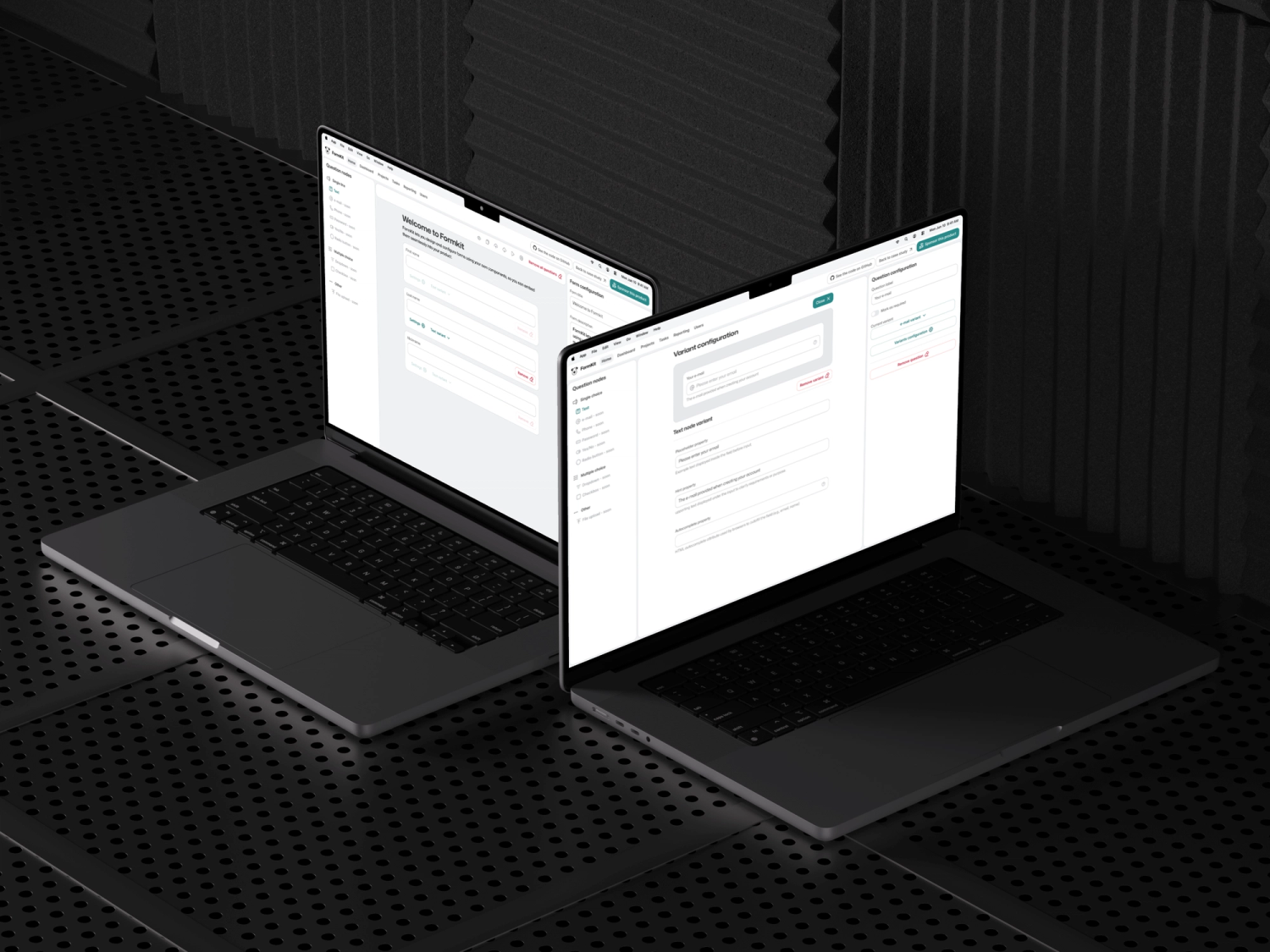
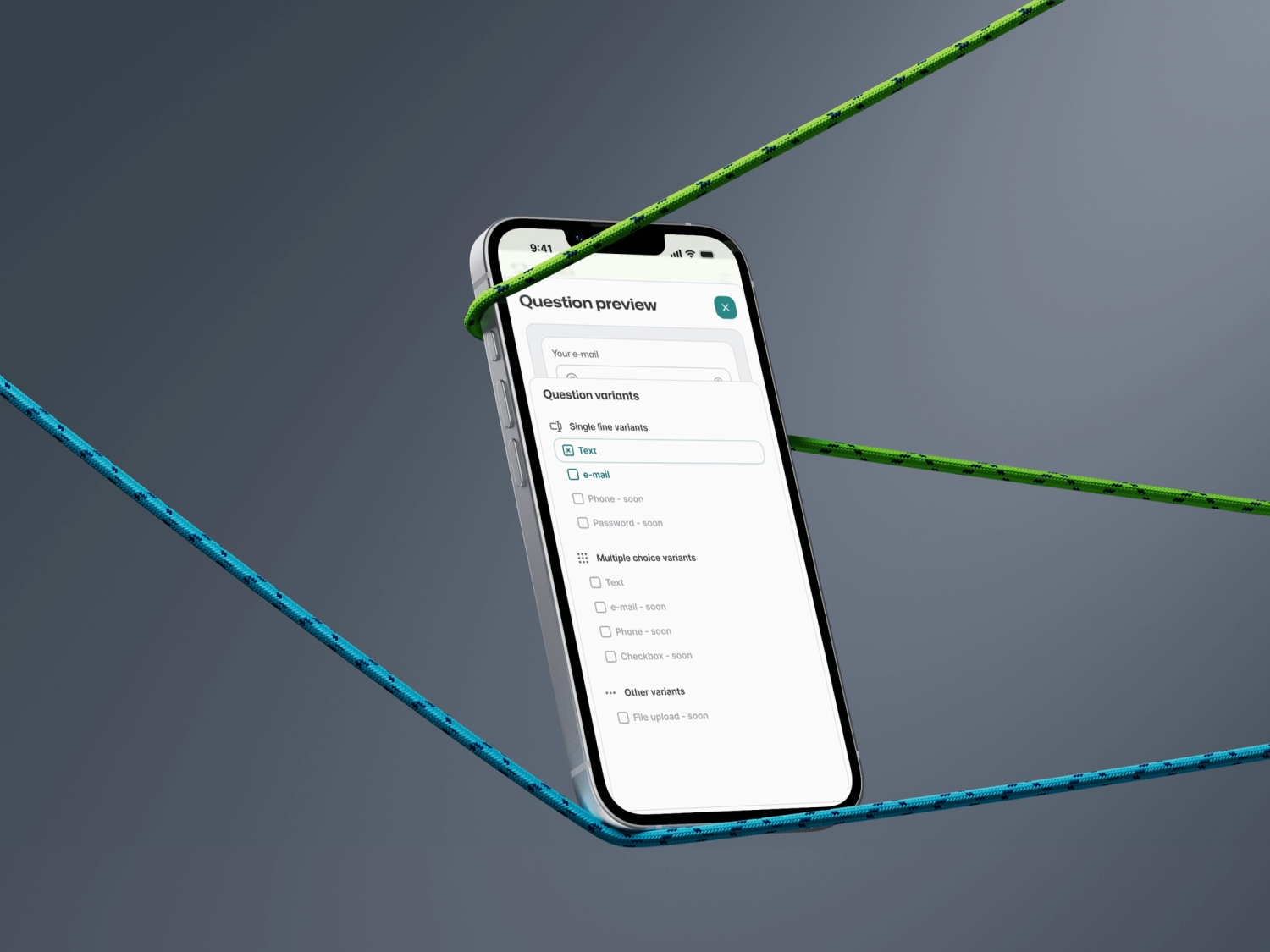
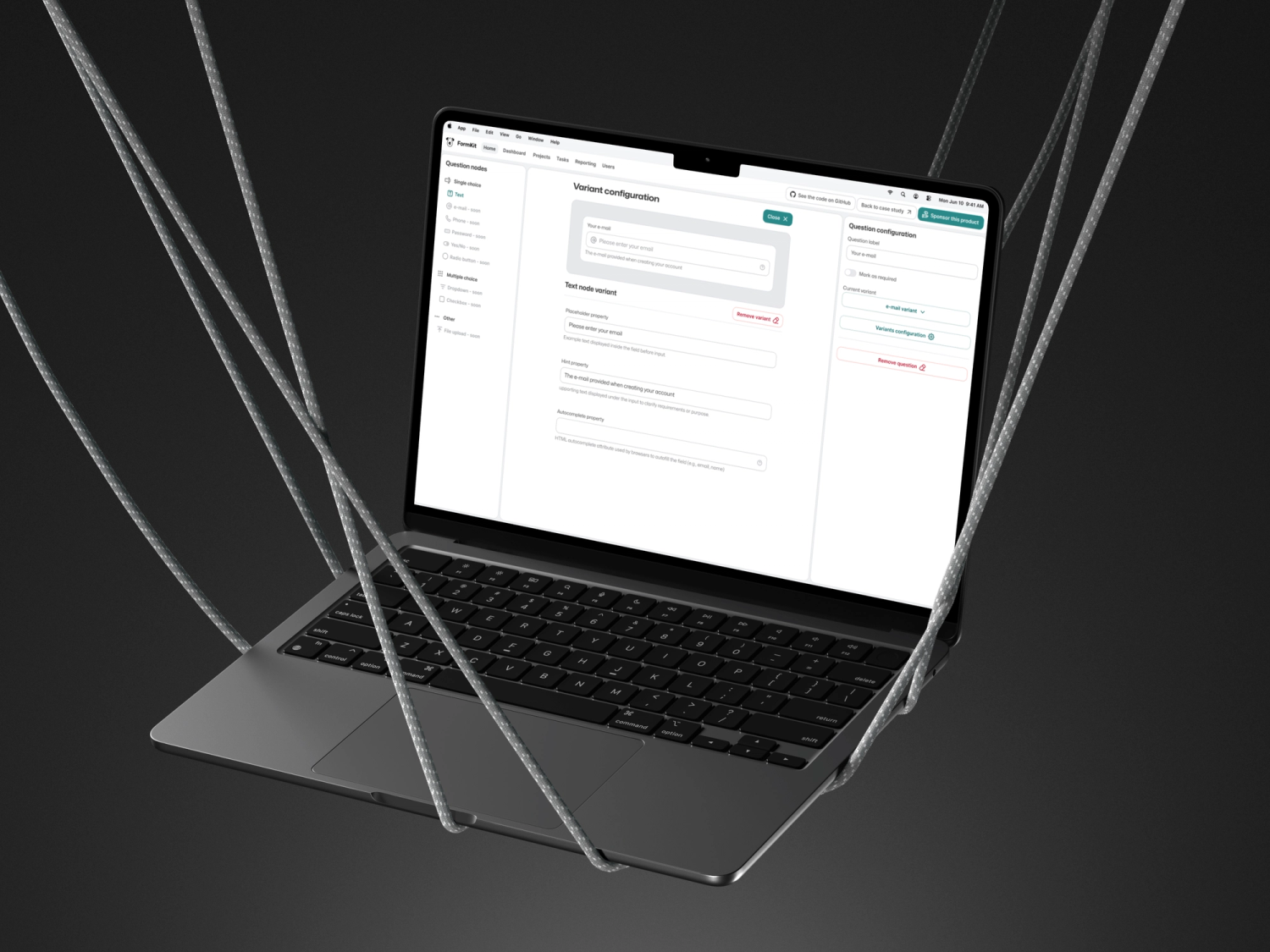
FormKit was designed as a schema-driven form platform built around separation of concerns.
At its core, the system defines form structure independently from rendering, allowing schemas, validation rules, runtime state, and conditional behavior to operate as distinct but connected layers. That architecture made it possible to think beyond a single implementation and toward a reusable foundation that could support different interfaces and future framework adapters without rewriting the underlying logic.
Instead of centering the work around a one-off form builder, I approached FormKit as an internal product that could test how form systems should behave at scale. The goal was to create a canonical runtime model capable of handling dynamic field relationships, validation flows, and UI composition while remaining structured enough to evolve into a broader platform.
The result was a product that functions both as a working proof of concept and as a strategic foundation for reusable form infrastructure — built not just to generate forms, but to define a more scalable way of building them.